-
The PPE suppliers I trust most are the ones who tell me what they don't do
-
Who's actually responsible for PPE—and why it changes how I buy
-
What a "full-range" supplier cost me
-
The "one supplier for everything" idea comes from a different era
-
Yes, this costs me some time. No, I'm not going back.
-
What "expertise with boundaries" looks like in practice
-
If you're auditing your PPE supplier list this quarter
-
Who's actually responsible for PPE—and why it changes how I buy
The PPE suppliers I trust most are the ones who tell me what they don't do
I've been running PPE procurement for a 380-person manufacturing company since 2019. In that time I've placed somewhere north of 700 orders across safety footwear, gloves, high-vis, FR garments, and the usual consumables. And the single biggest filter I use now isn't price or lead time—it's whether a supplier will tell me, in plain language, where their range stops.
If that sounds backwards, stick with me.
Who's actually responsible for PPE—and why it changes how I buy
Quick reality check, because this comes up in almost every audit I've been through: who is responsible for providing PPE? Under OSHA 29 CFR 1910.132, it's the employer. Not the supplier. Not the worker. The company. PPE has to be provided at no cost to employees, and it has to be appropriate for the hazard.
That one sentence changes the entire supplier conversation. I'm not buying jackets and coveralls. I'm buying documented evidence that our company meets a legal obligation. Which means I need suppliers who are honest about what standards their products actually meet—not suppliers who'll say whatever gets the PO signed.
The OSHA language has been stable for a while, but I still re-read the current text at osha.gov before every annual safety review. As of January 2025, the employer-paid requirement under 1910.132(h) is unchanged. Verify it yourself. Don't take my word, or anyone else's.
What a "full-range" supplier cost me
Here's where I learned this the hard way.
In 2021 I got a quote from a distributor who claimed to handle "all of our PPE needs." Jackets, gloves, boots, eyewear, welding gear, FR—everything under one invoice. Pricing was fairly reasonable, the admin was simple, so I consolidated our FR workwear order to them. About 240 coveralls across two facilities.
Six months later our safety audit flagged the FR garments. The certificate they'd sent covered the fabric, not the finished garment. The finished coveralls weren't certified to the standard we'd specified. Not ideal, but workable, right? No. I had to replace 240 coveralls in under three weeks and eat the expedited freight out of my own budget line.
That's the reverse validation I keep coming back to. Everyone had told me to verify that certificates matched the finished product. I only believed them after skipping that step once.
The supplier wasn't malicious, by the way. They just didn't have deep expertise in FR, and instead of admitting it, they sold me what their catalog had. A specialist would've looked at our spec and said "this isn't our strength—here's who does it properly." That one sentence would have saved me three weeks and a very uncomfortable conversation with our safety manager.
The "one supplier for everything" idea comes from a different era
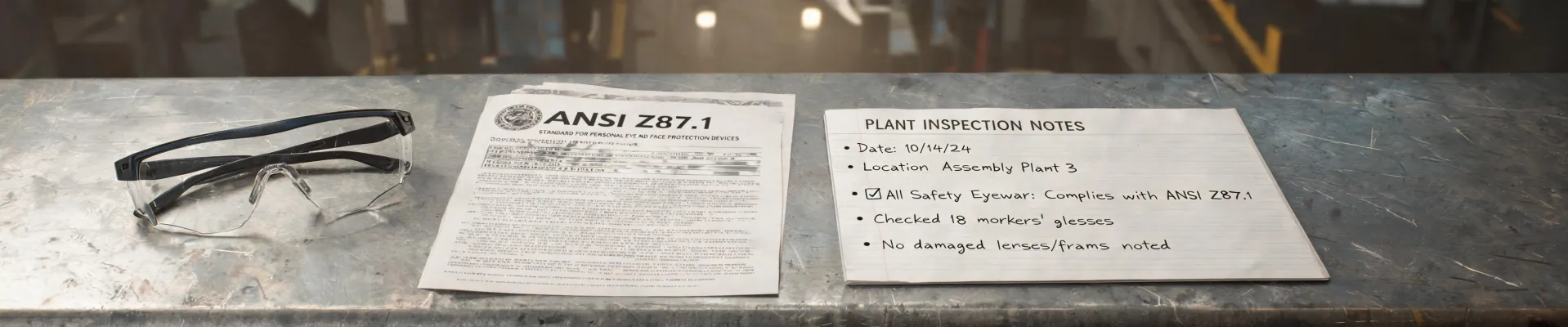
The 'one supplier for everything' thinking comes from an era when sourcing meant phone calls, faxes, and three-week quote cycles. Consolidating vendors back then genuinely saved real hours. Today? Most B2B PPE catalogs are online. Product standards (EN ISO 20471 for high-vis, EN ISO 11612 for FR, ANSI Z87.1 for eyewear) are documented and comparable across suppliers. A well-organized specialist is easier to evaluate than a generalist ever was.
The convenience argument hasn't disappeared. It's just gotten weaker every single year, and honestly, the gap is now small enough that "it's simpler to use one vendor" doesn't hold up the way it used to.
Yes, this costs me some time. No, I'm not going back.
The obvious pushback: consolidating vendors saves admin hours, and part of my job is admin hours. Fair. I track that stuff as carefully as anyone.
But the time math isn't what it looks like. One supplier means one relationship, sure—but it also means one single point of failure on compliance. When that generalist gets a certification question wrong, the fallout isn't a logistics hiccup. It's a safety audit finding, an emergency replacement order, and the kind of conversation I'd rather not repeat.
I'd rather manage six vendors with clear specializations than two vendors who claim to do everything. Fewer meetings per vendor. More confidence per order. If you ask me, that's a much better trade.
What "expertise with boundaries" looks like in practice
Here's how it plays out in our actual supplier list. Our Portwest workwear jackets, Portwest FR workwear, and coveralls all come direct from Portwest. Their core strength is garment manufacturing—the high-vis and FR lines are documented to EN ISO 20471 and EN ISO 11612, and the certificates list the finished garment, not just the fabric source. That specificity is what I actually trust. It's not about being "the best" at everything. It's about being precise about what you are.
For something like keen work boots, I go to a footwear-focused supplier. A company whose catalog is built around footwear spec sheets understands sole compounds and toe-cap standards in a way a garment-first supplier won't, no matter how good their intentions are. Both relationships make sense. Neither one is "better."
The suppliers I've quietly stopped calling are the ones who looked at that setup and said some version of "we can do all of it." Because in my experience, the supplier willing to say "that's not our category" is also the supplier who's precise about the categories they do claim.
That's not a knock on scale, by the way. Portwest covers a genuinely wide range—high-vis, FR, rainwear, workwear jackets, coveralls, gloves. The distinction I'm drawing is between a supplier who says "our range covers X, and here are the certificates for each" and a supplier who says "whatever you need, we happen to have it." The first is expertise. The second is a sales script.
If you're auditing your PPE supplier list this quarter
Ask each vendor one question: "Which of our categories do you think we'd be better served buying elsewhere?"
If they answer quickly and specifically—even if the answer is "that one, honestly"—keep them. If they hedge, or tell you there's no reason to look anywhere else, run your own verification before you place another order. Start with the certificate-per-garment check I learned the expensive way.
And if you take one thing from this: recognizing your supplier's limits isn't a failure of loyalty. It's part of doing the job properly. The vendors who've lasted longest in our system are the ones who told me early on what they weren't going to be the best at. That honesty is worth more than any discount they could've offered.

Katja Nieminen
Katja Nieminen is a safety-footwear analyst covering steel-toe and composite-toe boots, metatarsal footwear, electrical-hazard shoes, puncture-resistant soles, slip-resistant work shoes, and chemical-resistant boots. She references ASTM F2413 and EN ISO 20345 while comparing toe impact and compression, metatarsal protection, outsole puncture force, electrical resistance, slip coefficient, water penetration, sole adhesion, fit, and footwear mass. Her evaluations help EHS managers, contractors, plant operators, and procurement teams align footwear with falling-object, underfoot, electrical, chemical, wet-floor, climate, and all-shift comfort requirements.