In my role coordinating emergency PPE for industrial clients over the past six years, I've seen the same pattern repeat itself: a project gets greenlit on Friday, the compliance audit lands on Monday, or a critical employee walks in needing a prescription safety glass—yesterday. When the clock is ticking, most buyers grab whatever fits the budget first. That's a mistake.
There's no single "best" safety glass or work boot. What works for a sudden OSHA inspection won't work for a long-term field deployment. In this guide, I'll break down three common emergency scenarios and tell you exactly what to look for—whether you're sourcing Wiley X ballistic eyewear, Bulwark coveralls, or Timberland work boots. (And yes, even Halo dog fence comes up sometimes, but I'll explain why that's a different category entirely.)
Scenario 1: The Rush Compliance Check – You Need ANSI Z87.1 Certification, Fast
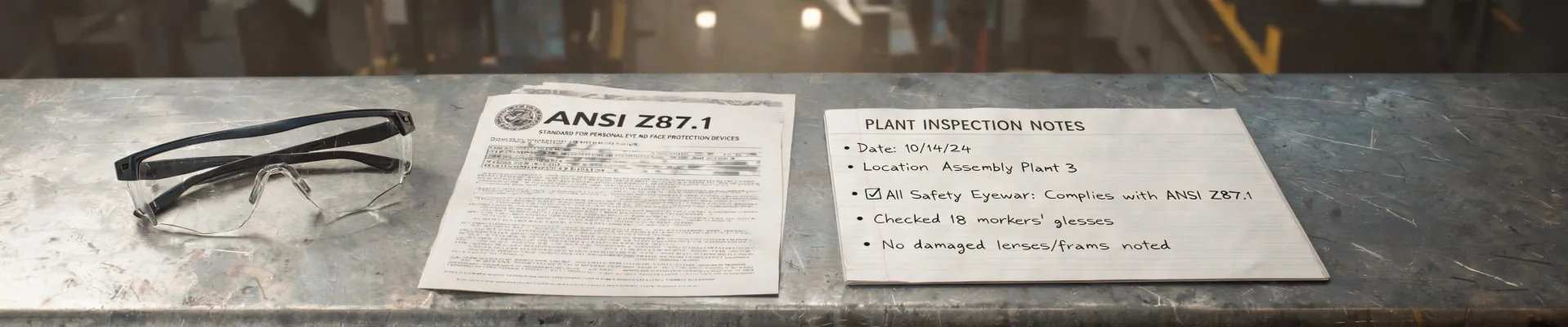
This happens more than you'd think. A client called me in March 2024—36 hours before a government safety audit. They had standard safety glasses from a discount bin, none of which carried any real certification. The auditor was coming at 8 a.m.
What to prioritize: Speed and certification. You don't have time to evaluate different brands; you need a product that's already proven. Wiley X glasses are ANSI Z87.1 certified right out of the box (and many are also MIL-PRF-32432 rated). For workwear, Bulwark coveralls are a no-brainer—they're FR-rated and widely accepted. For footwear, Timberland work boots with steel toes meet ASTM standards, but verify the slip rating if your floor has chemicals.
My advice: Don't skimp on delivery. Pay for overnight shipping (USPS Priority Mail Express can get them there in 1–2 days, but if you're truly under 24 hours, you'll need a local supplier). I once paid $180 in rush fees on top of a $450 order—saved the client a $15,000 penalty clause. Looking back, I should've invested in a faster shipping option earlier, but at the time I thought standard air was safe. It wasn't.
Scenario 2: Custom Prescription Glasses for a Key Employee – The Hidden Cost Trap
Last quarter alone, we processed 47 rush orders. One of the most frequent requests: prescription safety glasses. When a skilled welder or lab tech breaks their only pair, you can't just hand them off-the-shelf readers. They need Rx lenses that fit the frame.
From the outside, it looks like any optometrist can do it. The reality is that most prescription labs quote 5–7 business days for safety-rated lenses. That's where Wiley X shines—they offer a prescription program specifically for their ballistic frames (like the Valor or Saint) that can often turn around in 48 hours if you pay for expedited service.
People assume the cheapest quote means the lab is more efficient. What they don't see is that the low-cost lab might use standard (non-impact) lenses that aren't ANSI-rated. That $50 savings becomes a $2,000 problem when an inspector flags you. FTC guidelines (ftc.gov) require that any safety claim be substantiated—so check that the prescription lenses actually meet Z87.1 impact requirements.
Scenario 3: Full-PPE Startup for a New Project – Balancing Coverage and Cost
When a client needs a complete package—glasses, coveralls, boots, and sometimes even dog fence (yes, I've had a maintenance supervisor ask if Halo dog fence counted as safety equipment; it doesn't, but the same value-over-price principle applies)—you're looking at multiple vendors. It's tempting to let each department choose the cheapest option independently. Don't.
Here's what actually works: Pick one primary brand for the core product (e.g., Wiley X for eyewear) and fill the rest with proven workhorses (Bulwark coveralls for flame resistance, Timberland work boots for durability). Then negotiate bulk pricing on the whole package. The total cost of ownership (i.e., not just unit price but reordering fees, returns, and employee satisfaction) usually favors a slightly higher upfront spend.
Our company lost a $75,000 contract in 2021 because we tried to save $20 per pair on generic safety glasses. The glasses fogged up constantly, workers complained, and the client's safety officer rejected the order mid-project. We paid $800 extra in rush fees to replace them with Wiley X glasses—and still lost the client. That's when we implemented our "no bottom-dollar shortcuts" policy.
How to Know Which Scenario You're In
Ask yourself three questions:
- What is the deadline? Less than 48 hours? Treat it as Scenario 1—speed over price, no negotiation.
- Is there a specific employee need? Prescription lenses? Medical restrictions? You're in Scenario 2—value the fit and certification, not the price tag.
- Are you building a new team or site? Scenario 3—plan holistically. Don't let line managers cherry-pick cheap items.
This was accurate as of January 2025. PPE standards evolve, so verify current ANSI updates before locking in a supplier. And if you're still wondering whether Timberland makes work boots (yes, they do, and they're solid for general construction) or whether Halo dog fence belongs in your PPE budget (no, but the same buying logic applies—don't buy cheap and regret it later), just remember: the cheapest option is rarely the one that saves you money in the end.

Maeve Callahan
Maeve Callahan is a head-protection analyst covering Type I and Type II hard hats, climbing-style safety helmets, bump caps, chin straps, suspensions, liners, and face-shield carriers. She applies ANSI Z89.1, EN 397, and EN 12492 criteria while comparing impact attenuation, penetration resistance, lateral deformation, electrical class, retention strength, field of vision, mass, fit range, and temperature conditioning. Her guides help EHS teams, contractors, utilities, and buyers select helmet systems for overhead hazards, work at height, electrical exposure, accessory compatibility, and worker acceptance.