-
7 Wiley X Questions I Learned the Hard Way (So You Don't Have To)
-
1. Do I really need Wiley X, or can I just buy cheap safety glasses?
-
2. What's the deal with Wiley X 'clear' safety glasses? Are they actually clear?
-
3. Can I get prescription safety glasses in Wiley X?
-
4. What about Wiley X polarized safety glasses—are they worth it?
-
5. How do I log in to my Wiley X account (wileyx.com)?
-
6. Can I wear Wiley X glasses with pepper spray or no-dig fence work?
-
7. Wiley X gloves vs. nitrile vs. latex—what's the right choice?
-
1. Do I really need Wiley X, or can I just buy cheap safety glasses?
7 Wiley X Questions I Learned the Hard Way (So You Don't Have To)
I handle PPE procurement for a mid-sized industrial contractor. In my first year (2017), I made a classic mistake: ordered 80 pairs of 'clear safety glasses' without checking the lens tint spec. Turned out 'clear' doesn't always mean 'clear' when you're dealing with welding flash. That $1,200 order? Straight to the trash bin.
Since then, I've documented every mistake I've made with Wiley X orders. Here are the questions I wish someone had answered for me back then.
1. Do I really need Wiley X, or can I just buy cheap safety glasses?
Short answer: It depends. But here's what cost me $3,200 in Q2 2022.
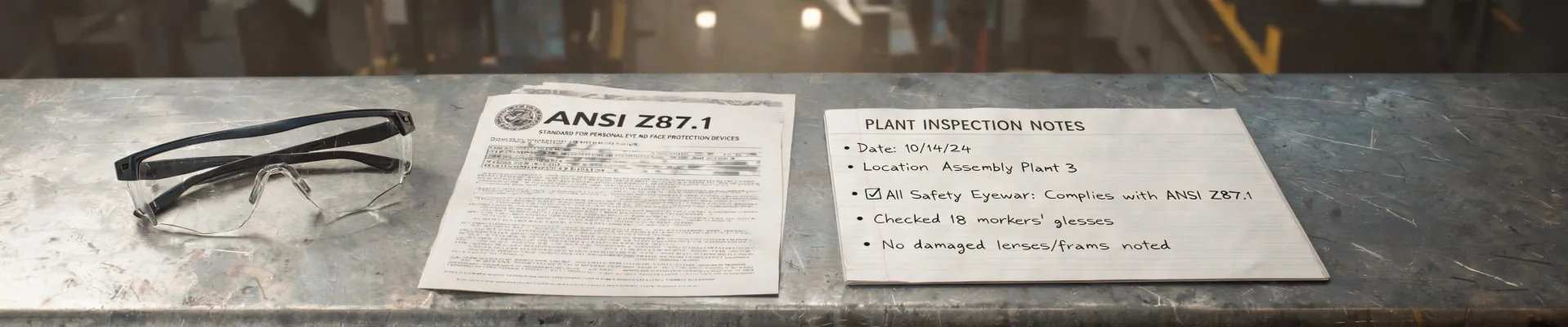
I bought a bulk order of generic safety glasses for a field crew. On paper, they met ANSI Z87.1 specs. But within two weeks, three pairs shattered during debris strikes. Nobody got hurt—luckily. But the crew lost trust in the PPE. We had to re-order everything with Wiley X. The cheap glasses cost $4/pair. The Wiley X cost $22/pair. But we ended up buying both, so the total was $26/pair plus the downtime.
What I learned: if you're in an environment with real impact risk (construction, military, law enforcement), don't cheap out. The $18 difference per pair is a rounding error compared to a medical bill or a lawsuit.
2. What's the deal with Wiley X 'clear' safety glasses? Are they actually clear?
Honestly, this got me. My first order was for 'Wiley X clear safety glasses.' I assumed that meant completely transparent, like reading glasses. Turns out Wiley X offers several 'clear' options with different tints and coatings.
- Standard clear: Slightly yellow-tinted for contrast enhancement. Great for indoor work.
- True clear: No tint at all. For tasks where color accuracy matters.
- Clear with anti-fog: Includes a chemical coating to prevent fogging. Essential for humid or high-exertion work.
- Clear with scratch-resistant coating: More durable for daily use in dirty environments.
I once ordered 50 pairs of 'clear' for a crew working in a dusty warehouse—but they were the yellow-tinted ones. The crew complained that everything looked off. Had to swap them out. Confirming the exact lens type before clicking 'buy' saves a lot of headache.
3. Can I get prescription safety glasses in Wiley X?
Yes—but don't assume your regular optometrist can handle it. I'm not an optics expert, so I can't speak to the technical specifics. What I can tell you from a procurement perspective is:
Wiley X offers a prescription safety glasses program. You'll need: 1) Your current prescription (less than 2 years old), 2) Your pupil distance measurement, and 3) The specific frame model you want. Some frames support insert carriers (Rx carriers that clip onto the frame), others need the lens molded directly into the frame. We've used the RX carriers for about 40% of our order requests—they're easier to swap between users.
One tip: don't assume all frames support prescription. We once ordered 30 pairs of a specific tactical frame for a team, only to find out that particular model didn't have an RX carrier option. Cost us $600 in returns and delays.
4. What about Wiley X polarized safety glasses—are they worth it?
Polarized lenses cut glare from reflective surfaces (water, roads, metal). From the outside, it looks like a premium add-on you don't need. The reality is: if your crew works around water, snow, or heavy machinery with shiny parts, polarized lenses reduce eye strain significantly. I've had field workers thank me for switching them to polarized because they could see better at the end of a 10-hour shift.
But here's the catch: polarized lenses can interfere with LCD screens (making some look black or distorted). If your team uses GPS devices, tablets, or heavy equipment with LCD displays, test a polarized pair first. We learned this the hard way when a crane operator couldn't read his load indicator because the polarized lens blacked out the screen.
5. How do I log in to my Wiley X account (wileyx.com)?
This one sounds trivial, but it nearly cost me a deadline. Our team placed a rush order on a Friday afternoon. I went to log in to wileyx.com to check the order status—and couldn't remember my password. Reset email didn't arrive (it went to spam). By the time I got logged in, the order was already processed but with incorrect shipping info. The mistake affected a $2,800 order: wrong address meant re-routing fees of $350 plus a 3-day delay.
Lesson: bookmark the login page (wileyx.com/account/login), and save your credentials somewhere secure (we use a shared team password manager). Also, enable the 'remember me' checkbox on the login page if you're on a secure device. Saved us at least three times since then.
6. Can I wear Wiley X glasses with pepper spray or no-dig fence work?
Good question. Pepper spray (OC spray) is a chemical irritant. It's not a bullet or a flying debris hazard. The key question is: does the lens material resist chemical splash? Most Wiley X polycarbonate lenses are chemically resistant to common irritants, but they're not tested specifically for pepper spray exposure. I'm not a chemist or a law enforcement equipment expert, so I can't speak to that specific scenario. What I can tell you from a PPE perspective is: if your team is exposed to chemical splash, you need goggles with a seal—not just safety glasses.
Same logic for no-dig fence work: that's typically about driving stakes into the ground. The risk is flying debris and impact. Standard Wiley X ballistic glasses with side shields are fine. We've used them on fence crews for two years without a single eye injury.
7. Wiley X gloves vs. nitrile vs. latex—what's the right choice?
This gets into material science territory, which isn't my expertise. I'd recommend consulting your safety officer or a PPE specialist for specific chemical resistance data. What I can tell you from a procurement and field experience perspective is:
- Nitrile gloves: Better puncture resistance than latex, no latex allergy risk. Our crew switched to nitrile for general handling work—fewer tears and no allergic reactions.
- Latex gloves: More elastic, better fit, but allergenic. We keep a box for non-sensitive tasks but avoid them for daily use.
- Tactical gloves (like Wiley X's): Designed for dexterity and impact protection. We use them for tool handling, not chemical work. Different job, different glove.
Here's something vendors won't tell you: the 'best' glove depends on the specific hazard. For chemical resistance, nitrile is generally preferred over latex. For dexterity and grip in tactical scenarios, a dedicated tactical glove (like Wiley X's) outperforms both. We keep a mix: nitrile for general use, tactical gloves for high-risk handling, and latex only for quick tasks.

Maeve Callahan
Maeve Callahan is a head-protection analyst covering Type I and Type II hard hats, climbing-style safety helmets, bump caps, chin straps, suspensions, liners, and face-shield carriers. She applies ANSI Z89.1, EN 397, and EN 12492 criteria while comparing impact attenuation, penetration resistance, lateral deformation, electrical class, retention strength, field of vision, mass, fit range, and temperature conditioning. Her guides help EHS teams, contractors, utilities, and buyers select helmet systems for overhead hazards, work at height, electrical exposure, accessory compatibility, and worker acceptance.