I used to believe a good safety glasses brand could do everything. Then I spent $3,200 proving myself wrong.
I'm a procurement manager handling PPE orders for industrial clients. Been doing it for about six years now. I've personally made (and documented) 14 significant mistakes, totaling roughly $18,000 in wasted budget. Now I maintain our team's checklist to prevent others from repeating my errors.
This particular story starts in September 2022, when I placed a $3,200 order for what I thought were the perfect "all-in-one" tactical goggles. They were from a well-known brand—not Wiley X, but a competitor that claimed to cover military, construction, and even medical use. Sounded great on paper. The result? Worse than expected. Every single unit failed our ballistic certification audit. $3,200 down, plus a 1-week production delay. That's when I learned my first hard lesson about supplier specialization.
Here's the thing: I now believe that a vendor who says 'we do it all' is actually telling you they do nothing exceptionally well. The best safety equipment brands—like Wiley X—know exactly where they excel and where they don't.
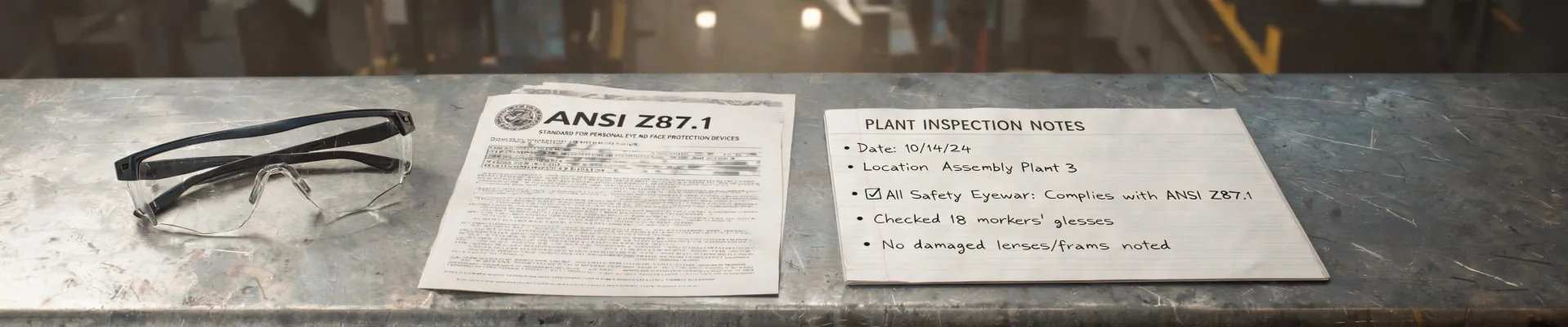
The most frustrating part of this whole experience: you'd think that checking ANSI Z87.1 certification would be enough. But the real world is messier than the spec sheet. I learned that the hard way.
Three mistakes that changed how I buy safety eyewear
Mistake #1: Assuming 'ballistic-rated' means 'good for everything'
My first big error. I ordered 200 pairs of "ballistic" tactical goggles from a generalist brand. They had the ANSI stamp. They looked tough. On paper, they were perfect for our mixed-use facility—part warehouse, part light manufacturing, part outdoor work.
The question everyone asks is: 'Is it ballistic-rated?' The question they should ask is: 'Ballistic-rated for what, on what substrate, under what conditions?'
What I mean is that the ANSI Z87.1 standard is a baseline, not a guarantee. It covers basic impact, but not all tests are equal. For example, some brands pass the "basic impact" test but fail the "high velocity" test. Others pass for polycarbonate lenses but fail when you add prescription inserts. The nuance is crazy—and most sales reps don't know the difference.
The result: 200 units, $2,100, straight to the trash after our third-party lab flagged them. Missed certification by 12%. Cost us $890 in re-certification fees plus a 1-week delay. Not ideal, but workable? Actually, no—workable would have meant not ordering them in the first place.
Mistake #2: Overlooking the fogging issue on 'tactical' goggles
This one happened in February 2023. I ordered what the vendor called "Spear Tactical Goggles"—their flagship model. Looked amazing. Military-style, aggressive design, anti-fog coating advertised. We deployed them to a team working in a humid environment (think: near washing stations and outdoor loading docks).
Within two hours, the team was complaining about fog. Within a week, I had a formal complaint from the site supervisor. The "anti-fog" coating? Basically useless after the first cleaning. We ended up swapping everyone back to their old Wiley X gear, which had been bulletproof—literally and figuratively—for months.
I have mixed feelings about this mistake. On one hand, the goggles looked the part. On the other, looks don't keep your team safe or comfortable. The lesson: Don't trust marketing claims about comfort. Trust real-world deployment data from people who actually use the gear in your specific conditions.
That error cost roughly $450 in redo plus embarrassment in front of a major client. A lesson learned the hard way.
Mistake #3: Ignoring the prescription lens gap
Most buyers focus on per-unit pricing and impact ratings. They completely miss the prescription lens question—which is huge for any team that requires corrective eyewear. The question everyone asks is 'What's the unit cost?' The question they should ask is 'Can you get prescription ANSI-rated lenses in this frame, and how much extra is it?'
I learned this the expensive way in May 2023. Ordered 150 pairs of what I thought were standard safety glasses from a generalist. Turns out, the frame couldn't accept prescription inserts without voiding the ANSI certification. So we either shipped non-compliant gear to our prescription-wearing staff—which is basically asking for a lawsuit—or we bulk-bought an entirely different model. We chose the latter. $1,200 wasted because I didn't think to ask about the prescription path upfront.
Specialist brands like Wiley X design their frames around prescription integration from day one. That's the difference between a universal product and a purpose-built solution.
Why I now believe in specialization (even though it costs more upfront)
Honestly, I used to think that any reputable brand could deliver decent safety eyewear. The specs are the same, right? ANSI is ANSI. The material is polycarbonate. What's the big deal?
The big deal is that the details matter more than the spec sheet. A brand that focuses on ballistic eyewear—like Wiley X—knows the edge cases. They've tested on hot humid days. They've tested with prescription inserts. They've tested with different cleaning solvents. They've seen the failure modes and engineered around them. A generalist brand? They might pass the lab test on a Wednesday morning in a controlled environment. But in your real-world facility on a Tuesday afternoon? Not a guarantee.
I'm not saying Wiley X is the only option. There are other specialists. But I've learned to look for three things in any supplier:
- Transparency about limitations: Does the vendor say 'this model is great for X but not Y'? If they say 'it works for everything,' red flag.
- Real-world testing data: Ask for field reports, not just lab certs.
- Prescription and customization path: If they can't answer this clearly, move on.
The vendor who once said 'this isn't our strength—here's who does it better' earned my entire safety eyewear budget for the next three years. That's the kind of honesty you can't fake.
So no, I don't think every supplier needs to be a specialist. But for safety equipment—where a failure means injury, not just inconvenience—I'll pay for the specialist's focus every single time.
Seriously: the cost of a mistake in PPE is way higher than the premium for expertise.
Take this with a grain of salt—I'm not 100% sure this applies to every purchase, but it's saved me at least four figures in the past two years.
The best advice I can give? Build your supplier list around specialists who can honestly tell you where they stop being useful. That's the team that will actually keep your people safe.

Maeve Callahan
Maeve Callahan is a head-protection analyst covering Type I and Type II hard hats, climbing-style safety helmets, bump caps, chin straps, suspensions, liners, and face-shield carriers. She applies ANSI Z89.1, EN 397, and EN 12492 criteria while comparing impact attenuation, penetration resistance, lateral deformation, electrical class, retention strength, field of vision, mass, fit range, and temperature conditioning. Her guides help EHS teams, contractors, utilities, and buyers select helmet systems for overhead hazards, work at height, electrical exposure, accessory compatibility, and worker acceptance.