-
First, Know Your Scenario: Four PPE Situations
- Scenario A: Impact or Ballistic Hazards → Wiley X Ballistic Eyewear
- Scenario B: Chemical Splashes and Particulates → Disposable Coveralls, Latex vs. Nitrile Gloves
-
Scenario C: Noise Hazards → Hearing Protection (and the Loop Earplugs Question)
-
How to Figure Out Which Scenario You're In
-
The 5-Point Checklist: The Cheapest Insurance You'll Ever Buy
Seven years ago, I placed my first PPE order as a newly promoted operations manager. I was handed a budget, a stack of vendor catalogs, and zero actual training. Since then, I've spent roughly $180,000 on safety equipment — and I've personally made about $3,200 in avoidable mistakes. Not counting the indirect costs: the failed audit, the crew members who lost trust in my judgment, and one near-miss with an eye injury that still keeps me up at night.
What I've learned, in one sentence: there is no universal "best" safety gear, only the right gear for your specific hazard. The smart way to choose PPE is to define your scenario first, then buy for that scenario. This is the guide I wish someone had handed me in 2018.
First, Know Your Scenario: Four PPE Situations
After seven years of sourcing gear, I've seen basically four situations:
- Impact/ballistic hazards — flying debris, metal chips, projectiles, fragmentation. Common in construction, fabrication, military, and law enforcement.
- Chemical/biological hazards — splashes, sprays, particulates, bodily fluids. Common in healthcare, hazmat, painting, and cleaning.
- Noise hazards — sustained loud environments, impact noise, shooting ranges, manufacturing floors.
- Combined hazards — most real sites, honestly. The challenge is finding gear that handles both without sacrificing either.
The mistake I made early on was treating every PPE order like the same purchase. A $40 pair of "safety glasses" doesn't replace a ballistic-rated pair, and a $30 case of latex gloves isn't the same product as a $45 case of nitrile — no matter how similar they look in the catalog. Let me walk through each scenario, and the costly mistakes I made so you can skip them.
Scenario A: Impact or Ballistic Hazards → Wiley X Ballistic Eyewear
This is where I made my first, dumbest mistake.
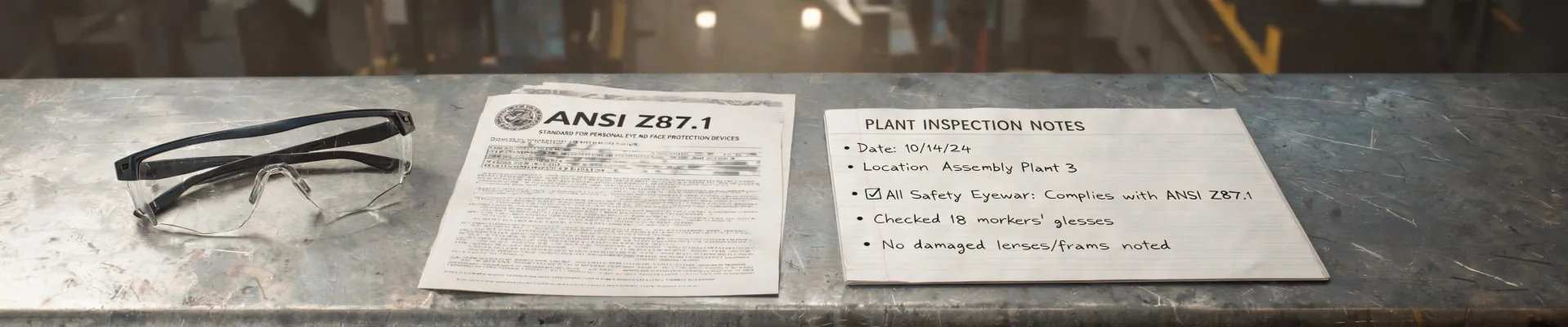
In 2018, I ordered 40 pairs of "ANSI compliant" safety glasses from a generic supplier. They looked fine on the screen, the price was right, and I approved the order without verifying the test documentation. When our auditor asked for certification sheets three months later, the supplier couldn't produce them. Forty pairs, $450, straight to the "unusable" box.
That failure taught me the calculation that still drives every eyewear decision I make. The upside of buying cheap was saving $400 up front. The risk was a failed audit — or worse, an eye injury that would've followed me forever. I kept asking myself: is $400 worth the possibility of explaining to a 30-year-old fabricator that his eyesight was damaged because I saved money on his glasses? The answer came fast, and I standardized our crew on Wiley X ballistic eyewear starting in 2019.
Wiley X Safety Glasses Review: What's Actually Good
I've ordered Wiley X for our crew at least six times in various models, so here's the honest review — or rather, years of real-world use condensed into the points that matter:
- Lens retention: Wiley X lenses stay in the frame under impact. With a cheaper pair I tested, the lens launched out on a simple drop from workbench height. If your hazard is flying debris, that's a deal-breaker.
- Verifiable test data: their ANSI Z87.1 documentation arrives with the order. When an auditor walks in, you hand them the sheets. I can't overstate how much stress this removes.
- Ballistic-rated models: for grinding, cutting, or high-velocity debris, their ballistic models go beyond basic impact. I've watched sparks bounce off these lenses. No failures in six years.
- Prescription options: this solved a chronic problem for us. We had crew members wearing over-glasses that fogged, or skipping protection entirely because their Rx frames didn't fit under standard safety glasses. Wiley X prescription safety glasses fixed that.
- Polarized lenses: for outdoor work, polarized Wiley X lenses cut glare significantly. I didn't realize how much my crew was squinting until we switched. "Wait, this is what it looks like without glare?" — a 20-year veteran said that on day one.
What's not as good? The price. Wiley X isn't the cheapest option — expect to pay a premium of roughly 30–60% over generic safety glasses (based on vendor quotes we collected in January 2025; verify current pricing). But here's what I tell managers who flinch at the cost: the price difference is nothing compared to the cost of one eye injury, or one failed audit.
However — and this is the counter-intuitive part — don't overbuy either. If your work has zero impact or debris risk, you don't need ballistic-rated glasses, and spending $150 per pair is as much a mistake as buying unverifiable junk. The right PPE is proportionate to the hazard. (I keep a pair of the light-duty Wiley X sunglasses in my office for exactly this reason — same brand, lower spec, way more comfortable.)
Scenario B: Chemical Splashes and Particulates → Disposable Coveralls, Latex vs. Nitrile Gloves
This is where I made my most expensive mistake — and the lesson had nothing to do with product specs.
In 2021, I ordered 500 pairs of latex gloves. They were the cheapest option that met our spec sheet. I approved it, processed it, received it. Within three days, crew members started reporting rashes on their hands. Turns out we had multiple people with latex sensitivities — and I'd never asked. The order was useless. $240 in gloves, $25 to ship them back via USPS Priority Mail, plus the vendor's restocking fee, plus the embarrassment of walking back to the foreman to say I'd messed up.
I still kick myself for that. One simple question — "any allergies or sensitivities on your crew?" — would have prevented the entire thing.
Latex vs. Nitrile Gloves: The Breakdown
Latex gloves have excellent tactile sensitivity and elasticity. For delicate work — small parts, lab handling, fine touch — latex genuinely wins. It's also typically the lower-cost option. The problem: latex protein allergies are common, and repeated exposure makes sensitivity worse. In a workplace where multiple people will wear the same gloves, latex is a liability unless you've confirmed your whole team is clear.
Nitrile gloves resist more chemicals across a broader range, puncture better, and are latex-free. The downsides: slightly less tactile sensitivity (though modern blends have narrowed that gap a lot) and a slightly higher per-box cost.
My default now: nitrile, unless you have a documented reason to need latex. The extra pennies per glove are cheap insurance. And for any task involving solvents, acids, or oils, nitrile is the better material regardless of allergy concerns.
Disposable Coveralls: Match the Material to the Liquid
The amount of misuse I've seen with disposable coveralls is staggering. Two opposite mistakes:
- Buying the cheapest "dust suit" and using it for liquid splash protection. The liquid soaks through and you've got contaminated fabric against skin — worse than no coveralls because the worker believes they're protected.
- Buying a heavy-duty chemical suit for tasks that only need light particulate protection. The crew overheats, removes the suit, and now you have zero protection instead of adequate protection. That's always worse than the "not enough" scenario.
The scenario-based answer:
- Dry particulates only (dust, dry sanding, cleaning): standard spun-bond polypropylene coveralls are fine. No need to spend more.
- Light liquids and sprays: go up a level — a coverall with SMS (spunbond-meltblown-spunbond) barrier or a liquid-repellent coating. Ask for the technical data sheet, and actually read it.
- Hazardous chemical handling: that's a certified chemical-splash suit, not a disposable coverall. Know the difference before you order. (I've literally had an auditor ask me for the test standard on a coverall order, and we passed only because I'd chosen the right classification.)
And here's the verification point: per FTC guidelines (ftc.gov), product claims must be truthful and substantiated — and that standard applies to industrial suppliers too. If a product page says "chemical-resistant," ask for the test standard. If they can't produce it, assume it's a marketing word, not a safety feature.
Scenario C: Noise Hazards → Hearing Protection (and the Loop Earplugs Question)
Noise is the hazard I underestimated the longest. Hearing damage is invisible and cumulative — nobody comes off the floor with a visible injury from a loud machine. So it's easy to under-spec or skip. I did. In 2022, one of our long-time crew members — only 38 years old — failed his hearing test. The doctor specifically noted industrial noise exposure. He's losing his hearing.
That hit harder than any financial loss. And it changed how I buy hearing protection.
The scenario split:
- Sustained industrial noise (85 dB+): earmuffs or foam earplugs with an NRR of 25 or higher. The real battle is compliance — people remove them when uncomfortable. That's why fit and comfort matter as much as the rating.
- Impact noise (ranges, stamping, sudden high-level bursts): you need level-dependent protection that blocks impact noise but still lets speech through. Standard foam won't cut it in a tactical environment.
- Long-duration wear, low-profile needs: this is where Loop earplugs entered my world — and I'll share the honest assessment.
Loop earplugs — specifically the Loop Experience and Loop Quiet models — have a reputation as consumer gadgets, not PPE. I thought the same until we tested them. They're genuinely comfortable for hours, low-profile enough to wear under a hard hat, and they do meaningfully reduce noise. We now use them for engine testing, utility work, and site visits where you still need auditory awareness but you want protection. What they are not is a replacement for ANSI-rated earmuffs on a continuous high-noise manufacturing floor. I say that as someone who actually likes them.
About the "loop earplugs discount code" part of the question — I'll be straight with you: I've seen third-party sites selling codes that either don't work or get rejected at checkout. Per FTC guidance on endorsements, any discount or affiliate code should be clearly disclosed, and if random blog #47 is handing out codes with no disclosure, treat that as a red flag. My suggestion: go to Loop's official site, check their current programs — they run legitimate discounts and offer healthcare/first-responder pricing — and skip the grey-market code sites. "Buy from the source so you actually get what you paid for" is the worst sales pitch ever, but it's been my experience.
How to Figure Out Which Scenario You're In
"Okay — but which one applies to my site?" I hear this from every new manager I train. Here's the process I use before every PPE order now (it has caught 47 potential issues in the past 18 months):
- Walk the floor and write down what can physically hit your workers. Not what the safety manual says should happen — what actually happens. Is someone grinding in a corner? Are chemicals stacked where they could spill? Did someone rig a machine guard?
- Ask your crew what they'll actually wear. The best spec in the world is worthless if the glasses live in a truck. Compliance jumped when we switched to Wiley X because people didn't mind wearing them all day.
- Check individual needs. Rx eyewear, glove allergies, ear canal fit — these aren't edge cases. On any crew of 10+, they're the norm.
- Request documentation before you order. Test sheets, ANSI standards, material data. If a vendor stalls, that's your answer — move on.
And one myth I want to bust, since it's cost managers a lot of money: people think expensive safety gear delivers better protection because it costs more. Actually, the causation runs the other way — gear that passes rigorous testing costs what it costs. You're paying for verifiable protection, not a "premium" label. That's why I now check documentation on every order, even for things that seem simple.
The 5-Point Checklist: The Cheapest Insurance You'll Ever Buy
This checklist started as my personal damage-control list after mistake #3, and it's now part of our company's procurement process:
- Define the specific hazard. Impact, liquid, chemical, noise — or a combination? Write it down.
- Verify the test documentation. ANSI, NRR, ASTM — physical evidence, not catalog language.
- Check your crew for individual needs. Allergies, prescriptions, comfort — ask before you order, not after.
- Test one before you order 50. Order a single sample, have your most skeptical crew member wear it for a day, then scale.
- File every piece of paper. Compliance documentation only counts when you can produce it.
Five minutes of verification is the cheapest line item in your safety budget. Five days of rework — or one avoidable injury — is the most expensive. I've paid that price so you don't have to. And yes, I dodged a bullet just last month, actually: caught a quantity typo on a PPE order (480 instead of 48) before submitting. That's exactly why I use this checklist, and why I'll never go back to the old way.

Jane Smith
I’m Jane Smith, a senior content writer with over 15 years of experience in the packaging and printing industry. I specialize in writing about the latest trends, technologies, and best practices in packaging design, sustainability, and printing techniques. My goal is to help businesses understand complex printing processes and design solutions that enhance both product packaging and brand visibility.