-
Why I Have a Strong Opinion on Safety Glasses
-
What Makes Wiley X Different
-
The Wiley X WX Peak Prescription Safety Glasses We Use
-
Finding Wiley X Safety Glasses Nearby
-
What About Lift Hard Hats, Ugg Earmuffs, and Ariat Work Boots?
-
What Costs More Than the Glasses: Hidden Fees and Trust
-
What I'd Do Differently
-
When This Might Not Apply
Why I Have a Strong Opinion on Safety Glasses
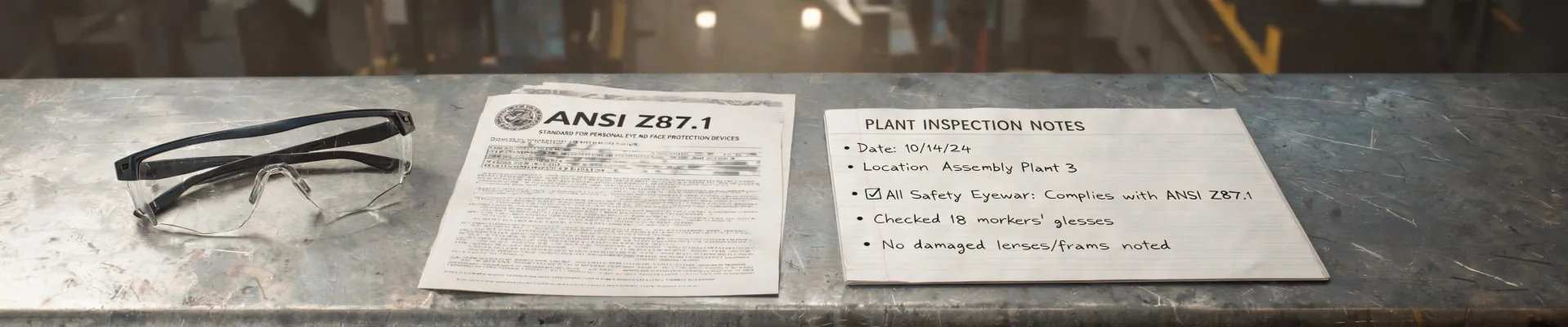
Short answer: yes, Wiley X safety glasses are worth it for the people who actually need to see clearly and keep their eyes intact. I've been managing PPE purchasing for a 65-person logistics company for five years, and after roughly 200 orders and about $15,000 spent on eye protection, Wiley X is the brand I'd default to—but only if I'm buying the right model from an authorized dealer. The frame is not the product; the lens, the fit, and the support behind it are.
I'm not a safety engineer or an optometrist. I'm the office administrator who reports to operations and finance. I manage eight vendors for everything from gloves to hard hats, and I process somewhere between 60 and 80 orders a year. When I took over purchasing in 2020, our eye protection was all over the place: some people had hardware-store glasses, some had old prescription frames, and no one was happy. In our 2024 vendor consolidation project, I standardized most of it on Wiley X. That worked, but not for the reasons you might think.
What Makes Wiley X Different
Wiley X is not magic. It's a company that builds eyewear to meet ANSI Z87.1 impact standards, and many frames also have military ballistic ratings. That matters because a lot of people treat safety glasses as a commodity. They're not. A cheap lens can have distortion, bad side coverage, or a coating that peels in six months. With Wiley X, the lens, frame seals, and replacement parts are all available, which is more than I can say for most brands.
Per FTC advertising guidelines (ftc.gov), claims like 'military-grade' have to be truthful and substantiated. So when a vendor says 'ballistic,' I ask for the test standard. For our OSHA purposes, ANSI Z87.1 is the only spec that matters. As of January 2025, I look for current ANSI certification on any eyewear we buy, and I do not rely on marketing labels.
The other difference is the eyewire. Wiley X frames have a built-in groove that holds an RX carrier, so people who wear prescription glasses can get impact protection without wearing bulky goggles over their glasses. That's the piece that solved our vision-related complaints.
The Wiley X WX Peak Prescription Safety Glasses We Use
The model we standardized on is the Wiley X WX Peak prescription safety glasses. It's basically a wraparound frame with a removable foam gasket that turns it into a goggle-style shield. The lens is shatter-resistant polycarbonate, which is thin enough for daily use. It also has an RX carrier that sits behind the main lens. For our drivers, dock staff, and maintenance crew, this is the combination that worked.
A note on prescriptions: I can only speak to standard single-vision lenses and lightweight progressives. If you need high-index lenses, prisms, or a very strong cylinder, the WX Peak's optical zone might not be enough. My experience is based on about 200 orders for a mid-size logistics crew. If you're working with more demanding vision needs, your experience might differ.
Finding Wiley X Safety Glasses Nearby
If you type 'Wiley X safety glasses nearby' into a search engine, you'll get a mix of optical stores, safety supply shops, and big-box retailers. Some sites hyphenate it as 'Wiley-X,' so don't let the spelling throw you off. My advice: check Wiley X's own website for an authorized dealer list before you go anywhere. Big-box stores might carry a few Wiley X frames, but they rarely stock RX carriers, replacement lenses, or foam gaskets. That's a red flag if you need a part later.
In our case, 'nearby' turned out to be a local uniform shop, not an eyeglasses store. They had a small Wiley X display, but the prescription fitting was done by an optometrist down the street. That split is normal, so don't assume the person at the counter can measure a pupillary distance or explain lens tints.
If you're ordering online, watch the shipping and handling line. USPS pricing is public: as of January 2025, a 1-oz First-Class Mail large envelope costs $1.50 at usps.com. If a vendor is charging $9.99 for 'processing' on a small lens carrier, that's not shipping. That's a fee they should have shown upfront.
What About Lift Hard Hats, Ugg Earmuffs, and Ariat Work Boots?
The related searches for 'Wiley X safety glasses nearby' often include 'lift hard hat,' 'ugg earmuffs,' and 'are ariat work boots good.' That makes sense, because PPE ordering is rarely just eyewear. I buy all of those too, so here's my quick take on each.
Lift hard hat: The Lift hard hat is one of the brands our warehouse crew requested. It's comfortable, the suspension adjusts easily, and the shell has a low profile that works with Wiley X frames. But remember that a hard hat should be replaced after any significant impact, and the shell gets UV-damaged over time. Don't spend the money on a nice hard hat and then keep it in service for a decade.
Ugg earmuffs: Ugg earmuffs are comfortable for cold weather, but they are not PPE. They don't have an NRR rating, and they won't protect anyone from hearing damage. If your site needs hearing protection, buy proper, rated earmuffs. Ugg earmuffs are for comfort on the walk to the truck.
Are Ariat work boots good? In my experience, Ariat work boots are good, at least for the work line and for people who stand on concrete all day. They're not the cheapest option, but our mechanics get fewer blisters and the toe box holds up. I can only speak to mid-size warehouse use. If you're in extreme cold or on sharp steel, you need a boot with a different safety rating and sole construction.
What Costs More Than the Glasses: Hidden Fees and Trust
Here's where my admin-buyer bias shows. A price is only real if it includes the stuff you need. I've learned to ask 'what's NOT included' before 'what's the price?' Some vendors advertise a low frame price, then add on for prescription lenses, anti-fog coating, tint, and shipping. One vendor who couldn't provide proper invoicing cost us $2,400 in a rejected expense report. Now I verify invoicing ability before placing any order, and I treat an upfront price sheet as a trust test.
The vendor who lists all fees upfront—even if the total looks higher—usually costs less in the end.
This is not about Wiley X specifically. It's about how the safety eyewear market is sold. The frame is premium, but the lenses, RX carriers, and gaskets are where the margins live. A vendor who is transparent about that from the first email is the one I want to keep.
What I'd Do Differently
Looking back, I should have ordered sample Wiley X frames before committing to one model for the whole team. At the time, I needed to restock quickly, and I chose based on a catalog photo. The result was two weeks of employees telling me the temples pressed too hard. We paid a restocking fee and reordered the next model. If I could redo that decision, I'd buy three sizes and let the pickiest people try them first. Given what I knew then, the choice was reasonable—but not smart.
When This Might Not Apply
This worked for us, but our situation is a mid-size distribution center with predictable PPE needs. If you're on a construction site with high airborne dust, flying wood chips, or chemical splash, a low-profile frame might not be enough. You may need a full-seal goggle or a face shield, not just safety glasses. And if your employees have unusual prescription requirements, you need a real optical fitting, not an online chart. The Wiley X WX Peak prescription safety glasses are a strong option, but they are not the only option. Your mileage may vary if the environment is more severe or if your worker population is different.

Jane Smith
I’m Jane Smith, a senior content writer with over 15 years of experience in the packaging and printing industry. I specialize in writing about the latest trends, technologies, and best practices in packaging design, sustainability, and printing techniques. My goal is to help businesses understand complex printing processes and design solutions that enhance both product packaging and brand visibility.