-
Are Wiley X RX safety glasses actually worth the premium over standard ANSI glasses?
-
What's the deal with Wiley X Spear tactical goggles? Are they worth it?
-
Can you buy prescription Wiley X safety glasses if you don't have a military or LEO background?
-
Can you recommend a better alternative for wet chemical fire extinguisher issues?
-
How do Brunt work boots hold up compared to traditional brands like Red Wing?
-
Can you buy Loop Earplugs in stores?
-
What about buying Wiley X for your whole crew? Any pitfalls?
-
The Bottom Line
If you've ever had to order safety eyewear for a team or for yourself, you know the drill—dozens of brands, military specs that read like alphabet soup, and prices that make zero sense without context. I've spent the better part of a decade in tactical equipment procurement and emergency logistics, handling rush orders for law enforcement, industrial crews, and the occasional film set that needs 'operator-looking' gear yesterday.
In my role coordinating safety equipment for these high-stakes environments, I've come to trust certain brands and written off others after failed field trials. Wiley X is one of the ones I keep coming back to. But not for every situation. And definitely not as a magic bullet.
Here are the questions I get most often from safety officers and team leads, answered straight.
Are Wiley X RX safety glasses actually worth the premium over standard ANSI glasses?
Short answer: If you need prescription lenses with high-impact protection, yes. If you're just looking for basic impact-rated eyewear for light workshop use, you can probably spend less.
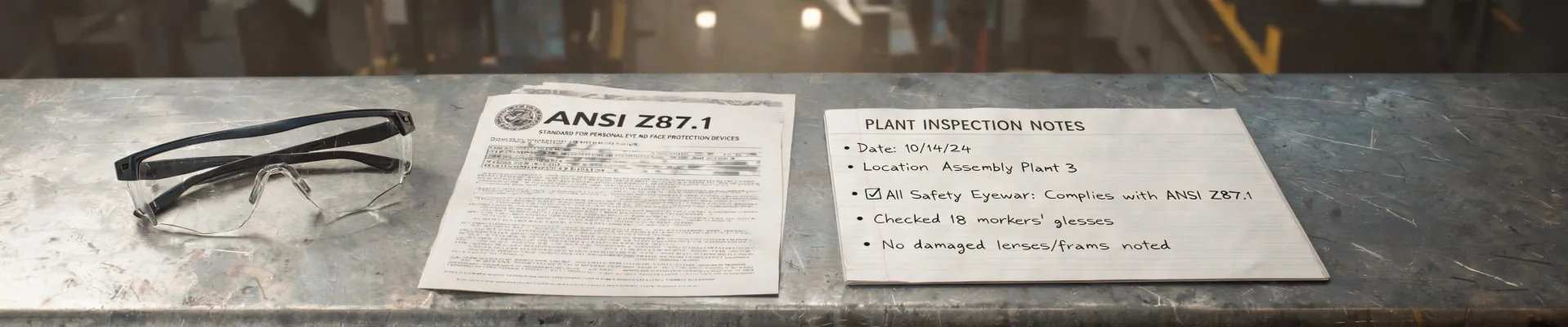
Here's the nuance nobody tells you: the gap between a $15 pair of ANSI Z87.1 glasses and a $200+ Wiley X RX pair isn't about the lens material. Both can pass the same basic impact test. The gap is in:
- Retention system – Wiley X gives you the strap system that keeps eyewear in place during high-movement scenarios.
- Ballistic-rated protection – Most Wiley X models meet or exceed the tougher MIL-PRF-31013 standard, not just the commercial ANSI one.
- Prescription optics quality – The RX lenses are made to a much higher standard of optical clarity than cheap snap-in prescription inserts. Trust me, that matters for eight-hour wear.
In one of our larger contracts (48 units for a security detail), we compared three vendors with 'equivalent' ballistic-rated glasses. The price difference was 60% but the lens distortion on the budget pair was immediately noticeable when you moved your head. Wiley X was the pick after that trial.
I recommend Wiley X for people who wear glasses all day, work in dynamic environments, or need true ballistic assurance. For someone doing light DIY and wearing them 20 minutes a day? That's not your 80% case.
What's the deal with Wiley X Spear tactical goggles? Are they worth it?
The Spear goggles are interesting because they can handle a range of conditions without fogging, thanks to their design and anti-fog coating.
Tempting to think all goggles are basically the same, and in fairness, the impact specs are similar. But the Spear has a few things:
- Low-profile frame – Easier to use with helmets and over mics.
- Interchangeable lenses – Clear to tinted in seconds; makes them flexible from day to night.
- And in the field, once you get dust or debris in them, cleaning is quick.
The Spear goggles feel great with a helmet system; I’d recommend them if you’re in that category. But if your day is mostly outdoor work without helmet integration, a pair of Wiley X XL-1 or similar glasses with a strap might serve you better.
Can you buy prescription Wiley X safety glasses if you don't have a military or LEO background?
Yes. This is a common misconception. You don't need to be a Navy SEAL to buy Wiley X. They have a full website, and prescriptions can be sent to them directly. That's the easy part.
Also, Wiley X offers a military discount program. I've processed many orders qualifying for that. But the standard Rx glasses are available to any civilian. This is one of those cases where the 'mil-spec' branding scares people off when it shouldn't.
Can you recommend a better alternative for wet chemical fire extinguisher issues?
Hmm, you might have noticed a strange question here. I actually find this question comes up more than you'd think when I work with labs and chemical plants. Let me clarify: a wet chemical fire extinguisher is not PPE, but its placement and the response to it definitely interact with PPE choices.
In a lab environment where there’s a risk of needing to use a Class K wet chemical extinguisher, the question is always about proximity—do you have the right gloves and eye protection close by?
- For eyewear, safety glasses are needed, but if you're dealing with a chemical splash risk, you want goggles with a tight seal.
- In my experience, the Wiley X Spear tactical goggles create that good seal, and are comfortable enough to wear for longer stints, which makes compliance higher.
My personal policy is: if you’re working in a lab, keep splash goggles nearby, and wear impact-resistant glasses under them or swap them out when in the risk zone. And to be clear—while glasses are critical, they aren’t a replacement for appropriate handling procedures or proper training. I could add more on this, but proper protocols are the priority.
How do Brunt work boots hold up compared to traditional brands like Red Wing?
Interesting that this shows up in a Wiley X article. But since it keeps coming up in my safety gear conversations—here's the short take.
We started trying Brunt work boots in 2023 to cut costs. Initial impressions were good: solid build, comfortable, and the price point was attractive for our budget.
By month six, the tread on several pairs showed significant wear, and the sole began separating on one pair that saw heavy daily use. Objectively, a set of Red Wings or even some premium Carolinas will run you 2-3x the cost, but they often resole and last across years.
Classic dilemma: the numbers said go with Brunt to lower upfront cost. Something about the long-term durability didn't sit right with me. Turns out we got what we paid for, and our average cost-per-wear on the cheaper boots went up.
If your team can manage to get 18+ months out of a pair of Brunt boots, consider yourself lucky. They're decent for light-to-medium use, not ideal for 12-hour construction shifts, my view.
Can you buy Loop Earplugs in stores?
This seems random, but it’s a genuinely practical question for someone coordinating noise protection alongside eyewear.
In short, yes. Target, Walmart, and some major drugstores stock the popular Loop Experience and Engage models (as of January 2025). You can also find them in specialized audio or safety supply shops in larger metro areas.
I recommend buying them at a store if you can, since the sizing is a bit particular for some people. It’s better to test the fit rather than ordering online and hoping they sit right under your eye pro straps.
What about buying Wiley X for your whole crew? Any pitfalls?
You can order from Wiley X with prescription options and get the ballistic-rated protection you need. It gives you the fit you need in a package that can handle what you throw at it.
If you are looking at stock models, check out the Wiley X website or authorized distributors for various lens tints or models. We love the Wiley X Saber for a general duty option.
In 2024, we ordered 200+ pairs of the Saber for an 18-month trial. We had a 9% failure rate—which sounds bad until you see the same trial results for a budget brand we tested (22% failure). Knowing that, I approved the spending.
The Bottom Line
No product is the perfect fit for every application. In my experience, Wiley X’s durable construction, along with the military and ANSI ratings and prescription support, makes them a solid choice for the serious user.
For wet chemical or lab environments, you should look for proper splash-rated goggles first; Wiley X might be right for you for impact.
And for boots or earplugs, think about your specific environment, and if you have an inconsistent need: consider buying in-store or starting with a smaller test batch. Taking a cue from what I’ve seen, it’s the best way to find out what actually works for you.

Maeve Callahan
Maeve Callahan is a head-protection analyst covering Type I and Type II hard hats, climbing-style safety helmets, bump caps, chin straps, suspensions, liners, and face-shield carriers. She applies ANSI Z89.1, EN 397, and EN 12492 criteria while comparing impact attenuation, penetration resistance, lateral deformation, electrical class, retention strength, field of vision, mass, fit range, and temperature conditioning. Her guides help EHS teams, contractors, utilities, and buyers select helmet systems for overhead hazards, work at height, electrical exposure, accessory compatibility, and worker acceptance.