Last October, I spent 20 minutes searching “where to refill fire extinguisher near me” while trying to get a quote for 400 pairs of safety glasses. That’s not a random Tuesday—that’s my job. I’m the office administrator for a mid-sized company. I manage PPE, facility supplies, and, apparently, the “I need this yesterday” requests. I handle about $80,000 a year in purchasing across 8 vendors, and I report to both operations and finance. The fire extinguisher search was squeezed between someone who wanted horizontal fence ideas for the loading dock and a manager who asked me to order a baby fence for the new parent room. I mention all this because it explains how I became the person who orders Wiley-X safety glasses for 400 employees without losing my mind.
How I Ended Up Ordering Safety Glasses
I took over purchasing in 2020. Before that, I didn’t know what a lead time was, and I definitely didn’t know the difference between “safety glasses” and “goggles.” I processed 60-80 orders a year across 6 vendors, and at first, I chose whoever gave me the lowest quote. It took one bad invoice to change that.
In early 2024, my VP asked me to consolidate PPE vendors. We had 400 employees across 3 locations, several different safety requirements, and no single source for prescription or tinted safety eyewear. I already knew Wiley X as a brand, mostly because the safety manager wore a pair and wouldn’t shut up about them. The trigger was simple: we had a group of field technicians who spend half the day outdoors and half in a dim warehouse. A clear lens didn’t work. A tinted lens didn’t work. Someone suggested Wiley X transition safety glasses—lenses that go dark outside and clear back inside—and that one suggestion turned into the whole conversation.
So I did what any responsible buyer would do. I got three quotes. The conventional wisdom in every procurement blog I’d read said always get multiple quotes. My experience with 180+ orders suggests that low quotes without a detailed breakdown are a red flag. But that’s hindsight—I didn’t know it yet.
The Low Quote That Wasn’t Low
The first quote came from our usual PPE distributor. It was itemized: frame, lens, tint, case, shipping, tax, total. The second quote came from a new online vendor who promised the same Wiley X transition safety glasses for 12% less. The third was from a local shop that couldn’t match the price and said yes, we should probably replace these specs with the Wiley X Valor military inspired sunglasses for the site supervisors. That was the first time I heard that name. It sounded like something you’d find on a military gear site, not a safety catalog.
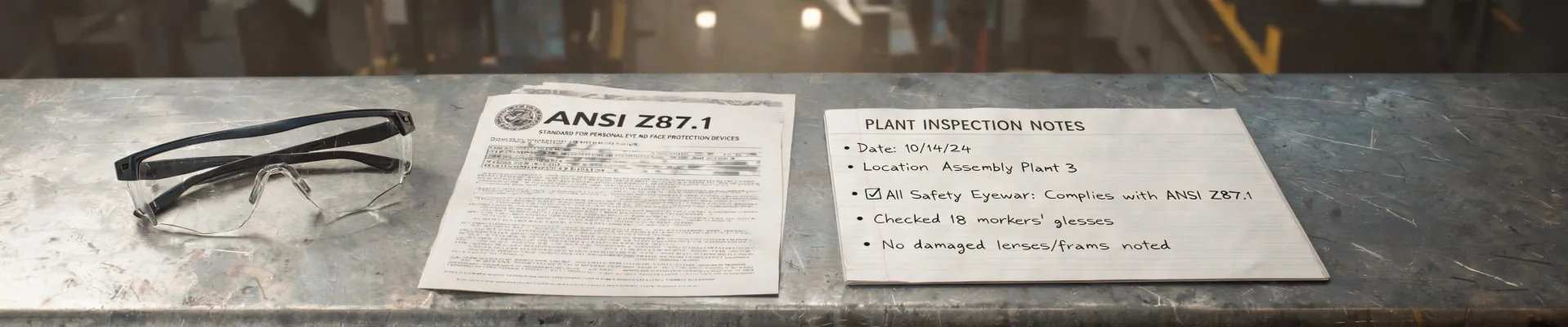
The new online vendor looked great on paper. Their quote spreadsheet was clean. They even set up a call to walk me through the products. I asked about ANSI Z87.1 and they said yes. I asked about shipping and they said they had a flat rate. I did not ask about setup fees. I did not ask if the certification documents came as part of the price. I did not ask what happened if a batch got rejected during inspection. Looking back, I should have asked all of those things. At the time, their price was $7,400 less than our regular distributor for the same line. I thought I was being a hero.
Then the order process started. The first sign was the order form. It had a section called “processing requirements” with three blank boxes. I assumed it was optional. It wasn’t. The second sign was the payment system. The vendor asked for a 50% deposit before confirming the order, and their invoice template had no purchase order number field. I still remember thinking, “No, this is exactly how expenses get rejected.”
One of the reasons I pushed back on the lower quote was the phrase “military inspired sunglasses.” Per FTC guidelines (ftc.gov), advertising claims need to be truthful and not misleading. We weren’t buying a fashion item; we were buying an ANSI Z87.1-rated product. So I asked the vendor to produce the test report for that specific frame. They sent a general brochure. That’s when I started adding “show me the certificate” to my standard follow-up questions.
By the time the invoice arrived, the total was $2,400 higher than the quote. There was a “documentation fee” for the ANSI certificates. There was a “transition lens batch setup” fee. There was an “expedited order handling” charge, even though we hadn’t requested expedited shipping. Nothing was hidden if you read the three-page terms and conditions—but I’m an admin buyer, not a contract lawyer. The price I saw at the top should be the price I pay. Or rather, that’s how I learned to think. The vendor’s actual answer was: “That’s our standard pricing structure.”
Finance rejected the invoice. Not entirely, but they flagged $2,400 in line items that weren’t in the original quote. My controller asked me to explain why I approved an order that didn’t match the quote. I spent a week calling the vendor, and they sent a revised invoice with the fees broken out separately. The original quote still didn’t match. In the end, our regular PPE distributor matched the final total anyway and delivered the order in three weeks. The new vendor kept our 50% deposit for “administration costs” until I disputed it with the credit card company.
The order itself? We ended up with a mix of Wiley X transition safety glasses for most of the team and Wiley X Valor military inspired sunglasses for the supervisors. Wait—I should say, “supervisors who preferred a larger, impact-resistant frame.” The transition lenses were the real change. They cut replacement lens purchases, saved the field team from swapping glasses when they moved between sunlight and the shop, and reduced complaints. As of Q4 2024, that line item is still in our approved vendor catalog.
The Same Week, There Was a Baby Fence
The same week the invoice mess was happening, I received three unrelated requests that all started with the same phrase, “Can you just handle this?” An ops supervisor sent me a folder of horizontal fence ideas for the security barrier near the dumpsters. My manager asked me to get a baby fence for the corner near HR—someone brought their infant to work while their childcare was closed, and suddenly we had a “family area” with no policy. And the maintenance lead asked where to refill fire extinguisher near me because the last inspection failed two units. I mention this because the little tasks and the big task had the same lesson: hidden details will get you.
The horizontal fence ideas turned out to be a rabbit hole. Some designs looked great but required custom steel posts, some were pure privacy screens, and one looked like a retaining wall with gaps. The company that quoted the cheapest horizontal fence had no drawings for the gate latch and no delivery timeline. We didn’t end up buying a fence after all, but the process reminded me that “cheap” never means “all-in.” The baby fence was easier. We bought a four-panel modular gate with a pressure-fit mount. No installation fee, no hidden cost, no vendor drama. The fire extinguisher refill took one phone call after I filtered out the first search results that wanted a hydration service and a pizza place.
The wider point is not really about Wiley X. Or maybe it is. The brand makes products in a crowded market, but what makes their eyewear easier to buy is the consistency of the spec sheets and the certification paperwork I can pull when a safety auditor asks. In that sense, a manufacturer’s transparency is part of the product. That’s why we put the Wiley X transition safety glasses back on the recommended list.
What I Do Differently Now
I now ask for a sample invoice before committing. Yes, before the price. If the invoice doesn’t have a purchase order field, a line-item breakdown, and a date, I move on. I also ask “what’s NOT included” before I ask “what’s the price.” That phrase has saved me more than any discount calculator. And I stopped treating “they’re cheaper” as a standalone reason. I still get multiple quotes, but I compare the full cost of the order, not the first number. After we consolidated vendors and standardized the PPE line, order processing dropped from about a day per month to a couple of hours.
My experience is based on about 200 mid-size PPE and facility orders from 2020 through late 2024. If you’re buying for a two-person shop, your process can be lighter. If you’re buying for an enterprise, you’ll go through a formal bidding process. I can’t speak to those procurement worlds. But for the messy middle—where one person has to choose safety glasses, fence ideas, and a fire extinguisher service in the same afternoon—this is what worked for me.
This pricing and vendor landscape was accurate as of Q4 2024. Safety standards change, distributors change, and fire extinguisher refill services come and go. Verify current options, and ask for a written quote with every fee on one sheet. If a vendor can’t do that, find one who can.
Oh, and if you’re the person who has to buy both a baby fence and ballistic-rated safety glasses in the same month: you’re not alone. Ask for the itemized invoice. It’s the only way to keep your finance team happy.

Jane Smith
I’m Jane Smith, a senior content writer with over 15 years of experience in the packaging and printing industry. I specialize in writing about the latest trends, technologies, and best practices in packaging design, sustainability, and printing techniques. My goal is to help businesses understand complex printing processes and design solutions that enhance both product packaging and brand visibility.