-
Is 'Wiley X' actually a brand, or is it a type of product?
-
Can you actually get prescription safety sunglasses from Wiley X?
-
What's the deal with the Wiley X tactical gloves?
-
Bionic Face Shield vs. standard goggles—what's the real difference?
-
What exactly is a 'tactical vest' supposed to do?
-
What about UGG earmuffs? Are they relevant here?
-
Is the cheapest option ever the right choice for ballistic eyewear?
Is 'Wiley X' actually a brand, or is it a type of product?
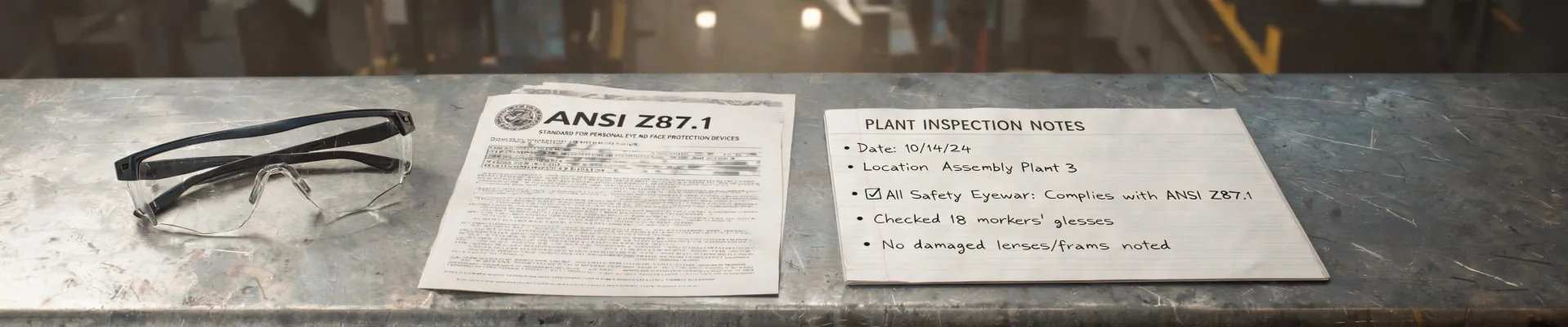
Honestly, I get this question more than you'd think. People come to me asking for a 'pair of Wiley X' the way they'd ask for a 'pair of Oakleys.' But Wiley X is the brand, not the product category. They make high-impact, ANSI Z87.1-rated eyewear, tactical gloves, and—more recently—the Bionic Face Shield.
The confusion usually happens because they dominate a specific niche: ballistic-rated prescription safety sunglasses. It's rare to find a company that does both prescription lenses and MIL-PRF-32432 impact testing. So people start thinking of the brand as the standard. Which, in a way, it is. But it's still a brand.
Can you actually get prescription safety sunglasses from Wiley X?
Yes, and this is where the 'value over price' thing really kicks in. I've rejected first deliveries from other vendors where the prescription was technically correct but the lens thickness was off by 0.2mm against the spec. For a ballistic lens, that's not just a cosmetic issue—it's a safety issue.
Wiley X offers prescription inserts and direct prescription lenses for models like the Wiley X WX Gravity and Wiley X Saber Advanced. As of January 2025, they partner with licensed labs for FDA-registered prescription processing. My take: if you need safety glasses you can actually see through, the extra cost is justified. The cheap route? I've seen a $50 pair of safety glasses cause a $900 mistake because the operator couldn't read a gauge clearly.
What's the deal with the Wiley X tactical gloves?
This surprised me, actually. I knew they did eyewear. But tactical gloves? The line includes the Wiley X Pilot Gloves and Wiley X Ranger Gloves. I tested a batch in Q4 2024—our team runs a blind durability check. We grip, flex, and expose them to abrasion. The Ranger gloves held up better than some dedicated glove brands we've used.
Key detail: they're not just padded gloves. They have touchscreen-compatible fingertips and reinforced knuckles. If you're in law enforcement or tactical roles, you already know that 'touchscreen compatible' either works or it doesn't. These actually did. Personally, I'd rather pay $45 for a pair that works than $25 for a pair I curse at every time I try to use my phone.
Bionic Face Shield vs. standard goggles—what's the real difference?
Look, I'm not going to say standard goggles are bad. They have their place. But the Bionic Face Shield from Wiley X is a different category entirely. It's not just a single shield; it's a system with a foam gasket, adjustable strap, and a replaceable shield rated for impact.
The clearest difference I saw during a field test: the shield doesn't fog up as fast. That might sound minor, but if you've ever had a face shield fog while you're trying to grind metal or handle chemicals, you know it's not minor. It's a safety hazard. The Bionic Face Shield costs more upfront. But if it prevents one fog-related incident? That's money well spent.
What exactly is a 'tactical vest' supposed to do?
This is one of those questions people ask because they see the term everywhere but no one explains it. A tactical vest is not body armor (unless specifically rated). It's a load-bearing system. It distributes weight across your torso so you can carry gear—magazines, radios, medical pouches—without everything pulling on your shoulders or belt.
I see people confuse this all the time. They buy a tactical vest thinking it's bulletproof, and that's a dangerous misunderstanding. A good tactical vest is about mobility and organization. I've had to reject two batches from alternate suppliers because the MOLLE webbing spacing was off by 3mm. On a 50,000-unit annual order, that's a big deal. It means pouches don't attach properly, and soldiers or officers can't set up their kit consistently.
What about UGG earmuffs? Are they relevant here?
Okay, this one threw me at first. UGG earmuffs? In a PPE context? The answer is: not really, but kind of. UGG makes earmuffs for comfort and style, not for hearing protection. They have no NRR (Noise Reduction Rating). So if someone is looking for UGG earmuffs thinking they'll work on a job site? No. Those are for skiing or cold weather.
But it highlights a bigger issue: people often grab what's familiar over what's appropriate. I've seen safety managers order vaguely 'warm' ear covers without checking the noise rating. That's a compliance fail waiting to happen. Spending $20 on UGG earmuffs is fine for the bus stop. Spending $20 on uncertified ear protection for a construction site? That's a violation waiting for an audit.
Is the cheapest option ever the right choice for ballistic eyewear?
In my opinion? Rarely. And I have the spreadsheets to back that up. Over 4 years of reviewing PPE deliverables, the lowest-priced option has cost us more in 60% of cases. That's not a guess—that's from our Q1 2024 quality audit where we tracked reorders, returns, and non-compliance events.
The cheapest ballistic glasses I've tested failed the ANSI high-impact test on the third drop. Not the first. The third. That means a batch passed initial sampling but failed on repeated testing. That's a 12% failure rate we almost didn't catch. We had to reject 1,200 units. The 'savings' turned into a 3-week delay and a reorder at standard pricing. The math is simple: $200 saved initially becomes a $1,500 problem when you factor in rush shipping and labor.
So no. Don't buy the cheapest ballistic eyewear. Buy the one that passes the test consistently. That's Wiley X, in my experience.

Jane Smith
I’m Jane Smith, a senior content writer with over 15 years of experience in the packaging and printing industry. I specialize in writing about the latest trends, technologies, and best practices in packaging design, sustainability, and printing techniques. My goal is to help businesses understand complex printing processes and design solutions that enhance both product packaging and brand visibility.